
Flying Car Development
A two-seat intelligent split-type flying car engineering prototype has been successfully developed, combining vertical-takeoff flight with autonomous ground driving.
Prototype Unveiled
A manned two-seat intelligent split-type flying car engineering prototype was successfully developed and jointly unveiled by the Beijing Institute of Technology, the Beijing Institute of Technology Chongqing Innovation Center, Kuhei Technology (Beijing) Co., Ltd., and the Chongqing Municipal Science and Technology Bureau. The project was led by a team under Academician Xiang Changle of the Chinese Academy of Engineering.
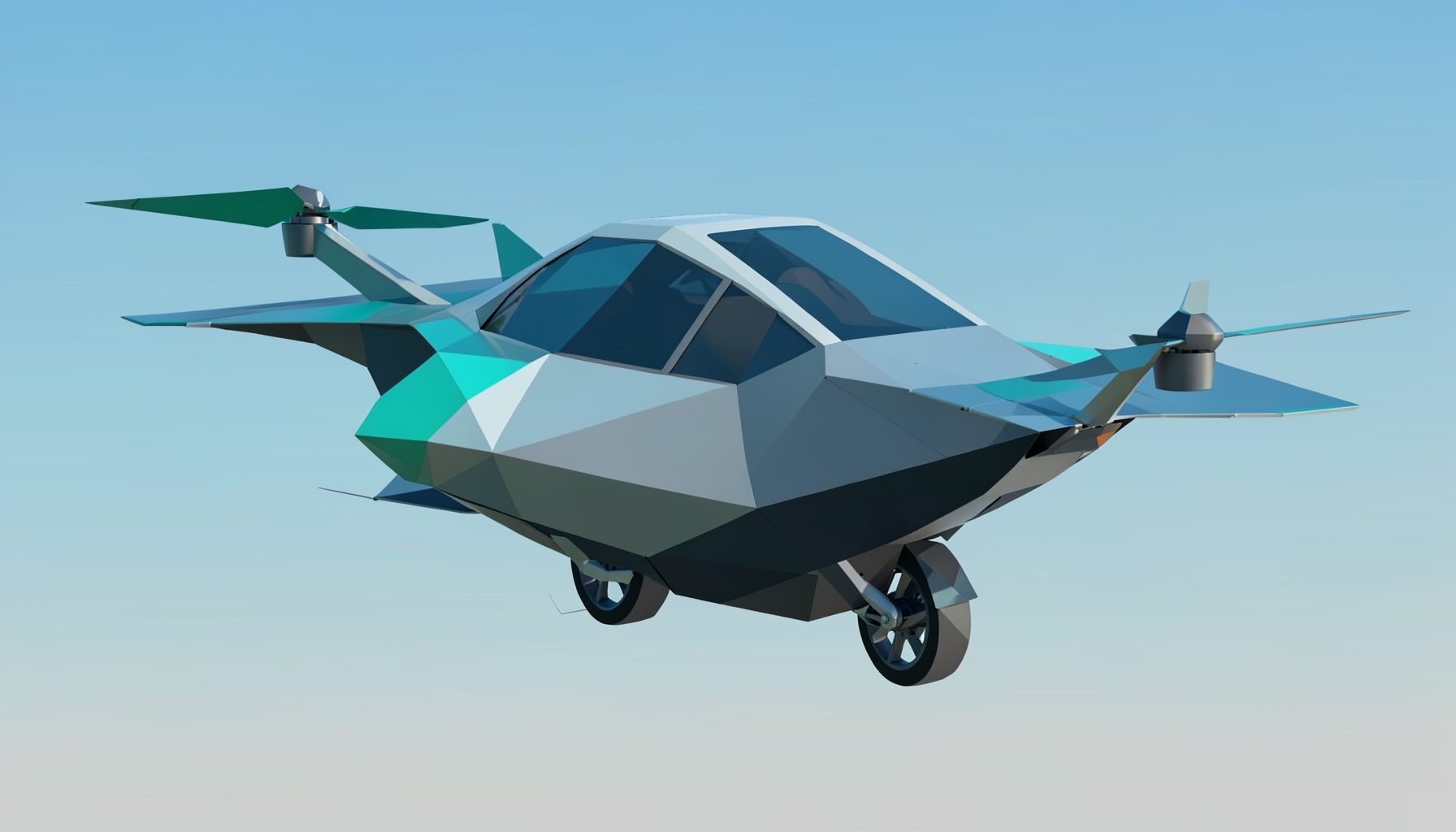
Split-Type Modular Design
The flying car uses a distinctive three-module split-type architecture:
- Autonomous vertical-takeoff-and-landing flight module — maximum takeoff weight of 650 kg, available in two configurations: a 6-duct fan variant and an open 8-axis 16-rotor variant, with a net payload of 280 kg.
- Intelligent control cockpit — an ultra-lightweight two-seat cabin with bespoke interior design, weighing just 80 kg.
- Autonomous driving chassis — supports a maximum load exceeding 500 kg and handles ground-based movement independently.
The system is conceived as a three-dimensional transport platform suitable for both passenger and cargo missions, with the flight and ground modules operating separately or in coordination.
Development Context
The prototype reflects ongoing research into urban air mobility and next-generation transportation. The split-type approach allows the cockpit to transition between flight and ground modes, potentially simplifying future deployment scenarios where both aerial and road infrastructure are needed.